

The Cost Sheet Shock Most NCR Buyers Face
A buyer walks into a sales office in NCR with one number in mind. The ad said one price. The first phone call repeated that price. Then the cost sheet arrives, and the final figure looks different because PLC charges in flats, floor rise, view premium, parking, GST, maintenance deposit, and other add-ons sit above the base price.
That moment can feel confusing because none of these words sound large on their own. A few charges may look small beside the base cost. But when the buyer adds them line by line, the booking budget changes. This is why a family should read the flat price breakup before comparing 2 units that look almost the same on paper.
Think of a couple shortlisting 2 flats in the same tower. Same layout. Same carpet area. Same project. One flat sits on a higher floor. One faces an internal green area. One has a corner position. The sales team may show floor rise charges for the floor, a view premium for the facing, and a PLC line for the preferred location inside the project. The buyer is no longer comparing only the base selling price.
For NCR buyers, this matters because the same project can have different pricing logic across towers, floors, views, booking stages, and payment plans. A lower floor may work better for a family with elderly parents. A higher floor may suit someone who wants more privacy and light. A park-facing side may feel calmer, while a road-facing side may need a noise check during peak hours.
The right way to read flat cost sheet charges is to slow down before token money. The buyer should ask what each line means, whether it is charged per sq. ft. or as a lump sum, and whether the same amount will appear in the booking form, allotment letter, and builder-buyer agreement. The cost sheet should help the buyer compare choices clearly, not leave the final price open to guesswork.
Floor Rise, View Premium, And PLC: The Charge Comparison Table
Before a buyer judges whether an apartment price breakup feels fair, they need to separate 3 ideas that often get mixed together: floor rise, view premium, and PLC. Builders may show them as separate lines, or they may group some of them under PLC. The label matters less than the written breakup.
A buyer should read preferential location charges as a charge linked to a better position inside the project. That better position could mean floor height, view, corner placement, park-facing side, club-facing side, road-facing side, or a tower location that many buyers prefer.
| Charge Type | What It Usually Means | Where It Appears In The Cost Sheet | What Buyer Should Ask | Risk If Ignored |
| Base selling price | The starting price of the flat before add-on charges | Usually shown as BSP, basic price, or base price | Is this calculated on carpet area, saleable area, or another stated area? | Buyer may compare 2 projects using only the base price and miss the real payable amount |
| PLC charges | Extra charge for a preferred location inside the project | May appear as PLC, location charge, preferred location, or similar wording | What makes this unit preferred: tower, side, floor, view, corner, or access? | Buyer may pay for a location benefit they have not checked on the site plan |
| Floor rise charges | Extra charge linked to the flat’s floor level | May appear as floor rise, floor premium, or floor-wise charge | From which floor does the charge start, and how is it calculated? | The same layout may cost more only because it sits on another floor |
| View premium | Extra charge for a preferred view from the unit | May appear as view charge, facing charge, green view, park view, or open-side charge | Is the view visible from the actual unit or only from the tower side? | Buyer may pay for a view that feels different during the site visit |
| Corner unit charge | Extra charge for a corner flat | May appear under PLC or as a separate corner charge | Does the corner position give better light, privacy, ventilation, or only a different label? | Buyer may assume corner always means better daily comfort |
| Park-facing or green-facing charge | Extra charge for facing a park, lawn, or green area | May appear under view premium or PLC | Is the green area part of the approved layout, and can another tower block the view later? | The paid benefit may depend on future site development |
| Club-facing charge | Extra charge for facing the clubhouse or activity area | May appear as amenity-facing, club-facing, or PLC | Will this side be active or noisy during evenings and weekends? | The buyer may pay for convenience but get more sound than expected |
| Road-facing or open-side charge | Extra charge for a wider open side, road view, or external-facing unit | May appear as road-facing, open-side, or view premium | Is the road busy, dusty, or noisy during peak hours? | A view may come with traffic sound or dust |
| GST on add-on charges | Tax treatment linked to the nature and stage of the booking | May appear in the tax section of the cost sheet | How is GST applied to PLC, floor rise, and view premium in this booking? | Buyer may misread the final payable cost if tax is checked late |
| Stamp duty and registration | Government charges paid during registration | Usually shown outside the builder’s base price and add-ons | What value will stamp duty be calculated on? | Buyer may budget only for builder charges and miss registration-stage costs |
Many buyers search floor rise charges only after seeing the cost sheet for the first time. It is better to ask before unit selection, because floor, view, and PLC can affect which flat fits the family’s budget.
How Floor Rise Charges Work In High-Rise Apartments
Buyers usually meet floor rise charges when the same flat layout costs more on another floor. The charge can depend on the builder’s floor band, tower height, view, demand, and booking stage. Before judging it, the buyer should ask where the charge starts and how it is written in the cost sheet.
| Floor Choice | Why Buyers Prefer It | Possible Charge Impact | Buyer Question To Ask | Family-Use Check |
| Lower floor | Easier daily movement, quicker exit, less lift dependence | May carry less floor rise in some projects, but floor rise charges in NCR can work differently by tower and buyer demand | Is this floor priced lower, same, or higher than the next floor band? | Works better for elderly parents, young children, or buyers who worry about lift waiting time |
| Mid floor | Balanced height, decent light, easier resale comfort for many families | May sit near the middle of the floor-wise pricing ladder | From which floor do floor rise charges start, and does this unit fall in that band? | Good for families who want height without feeling too far from daily movement |
| Higher floor | More light, more privacy, wider view, less street-level sound | May carry premium floor charges if the project prices upper floors higher | Is the extra amount linked only to height, or does it include view premium too? | Better for buyers who are comfortable with lift use and higher living levels |
| Top-side floor band | Wider sky view and more privacy in some towers | May carry a sharper floor-linked jump depending on demand | Is there any separate charge for the view, terrace proximity, or top-band floor? | Check heat, lift access, maintenance access, and family comfort before choosing |
| Floor near amenities | Shorter movement to club, garden, pickup point, or parking access | May sit under PLC instead of floor rise | Is the charge shown as floor rise, PLC, or both? | Useful when daily movement matters more than height |
| Floor with weaker view | Same layout, but less open side or more obstruction | May carry lower charge compared with a better-facing unit | Can I compare this unit with another floor in the same tower and stack? | May suit buyers who want better budget control over a view-led choice |
View Premium Charges: What The View Really Gives You
A brochure label is not enough for view premium charges in flats. A buyer should stand on the tower side, check the layout, and ask whether the view is tied to the actual unit or only to a general project-facing claim. The same view can feel different in the morning, evening, and peak traffic hours.
Park View
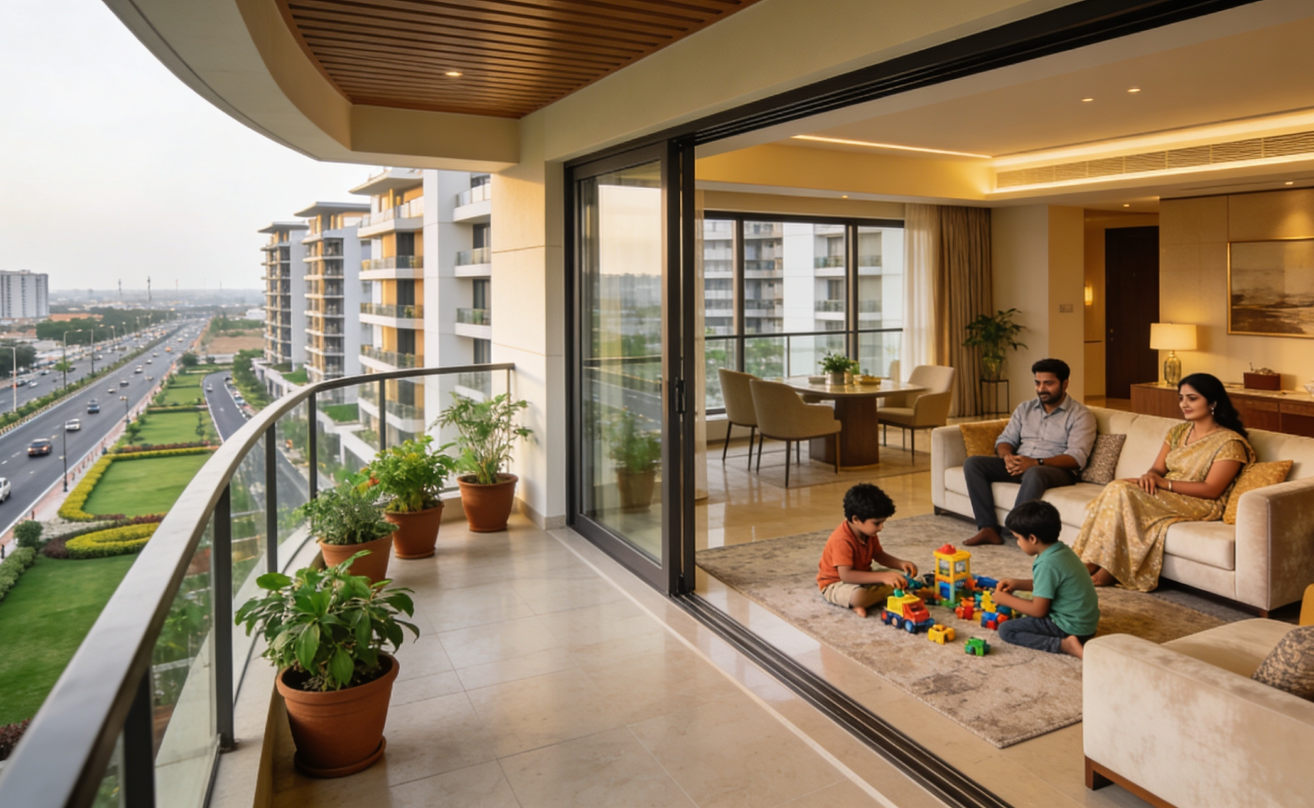
A park-facing flat can feel calmer because the eye gets more open space and greenery. Buyers checking park-facing PLC charges should ask whether the green area is part of the approved layout, and whether another tower or future structure can affect the view later. In a township-style setting such as Prateek Grand City, the buyer should compare tower placement, floor height, and actual facing before accepting the view label.
Open View
An open-side flat may give better light, wider sightlines, and less direct building-to-building closeness. But open-side premium needs a layout check because another tower, road, or structure can change the feel of that side. Buyers should ask whether the cost sheet calls it view premium, PLC, or a separate facing charge.
Club View
A club-facing flat can look useful for families who want quick access to activity areas. It can also bring sound during evenings, weekends, and events, so the buyer should inspect the side at a busy hour. A buyer reviewing view premium charges should ask whether club-facing value is about view, access, or both.
Road View
A road-facing unit may give openness, easy orientation, and a wider outside view. It may also bring dust, traffic sound, or headlight glare, depending on the road width and distance from the tower. NCR buyers should check this during peak traffic, not only during a quiet site visit.
Corner Or Side Openness
A corner or side-open flat can give better ventilation, more light, or more privacy than an inward-facing unit. The buyer should still ask whether the charge is for corner position, view premium, PLC, or a mix of these lines. If the cost sheet uses one broad label, the booking form should explain what the buyer is actually paying for.
PLC Charges Inside A Project: Tower, Side, Road, Park, Club, And Corner
PLC charges in flats are usually tied to the unit’s position inside the project. That position may mean the tower, the side, the view, the corner placement, or the way the family moves through the project every day. Buyers should read PLC charge types with the site plan open, because the same word can cover different benefits in different cost sheets.
| PLC Type | What It May Relate To | What Buyer Should Inspect | What To Ask In The Cost Sheet | Budget Impact |
| Park-facing PLC | A flat facing a garden, green patch, or internal open area | Stand near the tower side and check the actual view line, not only the brochure image | Is the park-facing cost shown as PLC, view premium, or a separate line? | The final payable amount may rise if the facing is treated as a preferred location |
| Corner PLC | A unit placed at the corner of a tower or floor plate | Check light, ventilation, privacy, and corridor movement around the unit | Is the corner position charged separately from floor rise charges? | The buyer may pay more even when the layout size is the same as a non-corner flat |
| Club-facing PLC | A flat facing the clubhouse, pool, or activity area | Visit during evening hours and weekends to judge sound and movement | Is this charge for the view, the amenity access, or both? | The charge may work for some families, but only if the activity-side comfort fits daily life |
| Preferred tower PLC | A tower closer to entry, open space, retail, parking, or quieter internal roads | Walk the route from gate, parking, lift lobby, and common areas | Why is this tower treated as preferred, and is it written in the price sheet? | The apartment price breakup can change even before floor and view are added |
| Road-access PLC | A unit or tower with easier approach from the main gate or internal road | Check traffic sound, visitor movement, dust, and school-bus pickup points | Is road-side access priced as convenience or as view premium? | Daily movement may improve, but noise and dust need a site-time check |
| Open-side PLC | A flat with a wider open side or less building-to-building closeness | Match the view with the approved layout and nearby construction plan | Is the open-side location part of preferential location charges or a separate view line? | The cost sheet may rise if buyers prefer light, privacy, and openness |
Where These Charges Appear In The Flat Cost Sheet
Flat cost sheet charges should be read line by line before booking. A buyer comparing Prateek Group projects should ask whether PLC, floor rise, and view premium are separate items or combined under one location-based line. For example, buyers checking Prateek Grand City should use the current cost sheet and booking documents, not older verbal estimates.
- Check The Base Price First: Ask whether the base price is shown separately from PLC, floor rise, view premium, parking, club charges, maintenance deposit, GST, stamp duty, and registration.
- Ask How The Area Is Counted: Check whether the add-on charge is applied on carpet area, saleable area, or another stated area. This matters because the same rate can create a different final amount when the area basis changes.
- Separate Floor Rise From PLC: When discussing a Prateek project cost sheet, ask whether floor rise charges are shown as a separate line or folded into PLC. This helps the buyer compare 2 floors without confusing height with location.
- Separate View Premium From PLC: Ask whether a park view, club view, road view, or open-side benefit is charged as view premium or listed under PLC. The wording should match the unit selected.
- Check Prateek Project Tower Context: If the selected unit sits in a preferred tower, ask why that tower carries a different charge. The answer should connect to tower placement, access, facing, or daily-use convenience.
- Match The Cost Sheet With The Booking Form: The same amount and charge name should appear in the booking document. If the sales sheet says one thing and the form says another, ask for written clarity before token money.
- Read The Allotment And Agreement Terms: Buyers can compare the current cost sheet with the agreement sale rules before signing. If there is any adjustment clause for unit, floor, tower, or view change, read it before signing.
- Ask For Current Written Numbers: For Prateek Grand City, Prateek Grand Begonia, or any other shortlisted Prateek project, use the current project cost sheet given by the sales team. Do not rely on forwarded price sheets, old screenshots, or resale-market claims.
How Prateek Buyers Can Read Project Cost Sheets Carefully
Prateek Group project names should come into this blog only where they help the buyer read the cost sheet better. A buyer comparing Siddharth Vihar, NH-24, or wider Ghaziabad options should check floor, tower side, view, PLC, and booking documents together. Do not assume the same charge logic applies across every project or every tower.
| Prateek Project | Location | What The Buyer Can Verify | Charge-Related Buyer Check | Buyer Should Verify |
| Prateek Grand City | Siddharth Vihar, Ghaziabad, near NH-24 | Official page describes it as ready-to-move | Check tower placement, floor height, internal road approach, park or open-side view, and whether PLC charges in flats are shown separately | Verify whether a higher floor, park side, or preferred tower has the same charge across all units |
| Prateek Grand Begonia | Siddharth Vihar, Ghaziabad, on NH-24 | Official page lists RERA registration | Ask how floor rise charges, view premium, PLC, parking, and taxes appear in the current cost sheet | Verify current written details instead of old screenshots, resale claims, or verbal rate memory |
| Prateek Grand Paeonia | Siddharth Vihar, Ghaziabad, within the wider Prateek Grand City context | Current status and project records should be checked through official or UP RERA sources before stating details | Compare floor options, tower side, and view before treating any location charge as useful for the family | Verify current inventory, rates, or charge slabs only through written confirmation |
| Prateek Grand Carnesia | Siddharth Vihar, Ghaziabad, within the wider Prateek Grand City context | UP RERA details list project documents, plans, and registration information | Check whether the cost sheet separates tower preference, corner position, floor rise, and view premium | Verify whether corner or open-side positioning improves daily use for the selected flat |
| Prateek The Royal Cliff | Crossings Republik, Ghaziabad | Official page describes it as a ready-to-move society | In a ready-home context, inspect actual floor, road access, view, lift movement, and any remaining add-on charge | Verify that visible site comfort also matches the booking and agreement terms |
Questions Buyers Should Ask Before Trusting The Final Cost Sheet
A cost sheet helps only when the buyer can connect every line to the selected flat. Floor rise, view premium, PLC, taxes, and booking-stage charges should be explained before token money. For written protection, the cost sheet should also match the booking form, allotment letter, and agreement terms.
Is Floor Rise Shown As A Separate Line?
Ask whether floor rise is charged separately or included inside PLC. If 2 flats have the same layout but sit on different floors, the buyer should know exactly how the floor difference changes the payable amount.
Is View Premium Tied To The Actual Unit?
Ask whether the view premium is based on the selected flat, tower side, or a broad project-facing label. If the flat is park-facing, road-facing, club-facing, or open-side, the buyer should see that logic reflected clearly in the cost sheet.
What Does PLC Mean For This Unit?
Ask what the PLC is paying for: tower placement, corner position, park side, road access, club view, open side, or daily convenience. A buyer checking preferential location charges should ask the team to name the specific location benefit.
Will The Booking Form Repeat The Same Charge Names?
Ask whether the booking form uses the same wording as the cost sheet. If the cost sheet says view premium but the form says PLC, the buyer should ask the sales team to explain the difference in writing.
Will The Agreement Carry The Same Charge Logic?
Ask whether floor, tower, view, PLC, and refund or adjustment terms appear in the agreement. Buyers can compare the cost sheet with the agreement sale rules before signing, especially when a charge depends on a promised unit feature.
Can I Compare Another Unit Before Deciding?
Ask for a second unit with the same layout but a different floor band, tower side, or view category. A buyer looking at Prateek Group projects can then judge whether the extra charge gives real family comfort or only stretches the budget.
A Cost-Sheet Case Study: Same Flat Size, Different Final Amount

A buyer shortlists 2 flats in the same NCR project. Both have the same layout and the same usable space. One sits on a mid floor with a standard inward-facing side. The other sits higher, faces an internal green area, and belongs to a tower placed closer to a quieter internal road. The base price looks close, but the final cost sheet changes after floor rise, view premium, PLC, GST, parking, and other add-on lines enter the picture. This is why a buyer should compare the hidden flat costs before treating 2 units as equal.
What The Buyer Saw In The Base Price
The base price made both flats look similar at first. The buyer compared the layout, tower name, and floor number, then assumed the higher-floor unit would cost only a little more. The sales team then shared the detailed cost sheet, where the base price formed only one part of the total amount. The buyer realised that the final number depended on floor choice, view, location inside the project, tax lines, and booking-stage charges.
What Changed In The Final Cost Sheet
The higher-floor unit carried floor rise charges. The green-facing side carried a view premium. The preferred tower position was listed as PLC, so the same flat size had a higher payable value. If GST applies to a booking, buyers should ask how add-on charges are treated in light of the GST Council clarification, especially when PLC or location charges are paid along with construction consideration.
What The Buyer Checked Before Booking
The buyer asked whether floor rise, view premium, and PLC were separate lines or clubbed together. They checked whether the charges were per sq. ft. or lump sum, and whether the same names would appear in the booking form and allotment letter. They also asked to compare another unit with a different floor and view, so the choice stayed linked to family comfort and budget. For Prateek Group projects, this same method helps a buyer compare tower side, floor height, view, and written cost sheet terms before paying token money.
How To Decide Whether The Extra Charge Fits Your Family
A charge can make sense when it solves a real daily-use need. It needs more checking when the buyer likes the label but cannot connect it to comfort, access, view, or budget. This grid keeps the focus on the family’s use of the flat, not only the project brochure.
| Buyer Situation | Charge To Examine | What To Ask | When It May Make Sense | When To Reconsider |
| Family with elderly parents | Floor rise charges | Does a lower or mid floor reduce lift dependence and daily strain? | When the floor choice supports easier movement and faster access | When the extra floor cost adds no real comfort for the family |
| Buyer choosing a park-facing flat | View premium charges in flats | Is the park view visible from the actual unit and supported by the layout? | When the view gives light, openness, and quieter daily living | When the view is partial, blocked, or far from the selected unit |
| Buyer comparing 2 towers | PLC charges in apartments | Why is this tower marked preferred: gate access, open side, quieter road, or amenity distance? | When tower placement improves daily movement or privacy | When the preferred label is vague in the cost sheet |
| Family with children | Club-facing or amenity-facing charge | Will the flat face activity noise during evenings or weekends? | When quick access to play areas or club spaces helps daily life | When the view adds sound, crowding, or privacy concerns |
| Budget-sensitive buyer | Apartment price breakup | Which charges can change if I choose another floor, tower, or facing? | When a slightly different unit reduces add-on cost without hurting daily use | When the buyer stretches the budget for a feature they may not use often |
| Buyer checking Prateek project options | Floor, view, and PLC lines | Can the sales team show the current cost sheet, booking form wording, and tower-side logic together? | When the selected Prateek Grand City unit matches family use, written charge details, and budget | When old screenshots, verbal claims, or unclear labels drive the choice |
Questions To Ask The Sales Team Before Paying Token Money
Token money should come after the buyer understands the charge breakup, not before. Floor rise, view premium, PLC, taxes, parking, maintenance deposits, and booking terms should all be clear in writing. Buyers can also read the booking amount limit under RERA before making a larger payment.
Is PLC Separate From Floor Rise In This Cost Sheet?
This matters because some cost sheets show PLC and floor rise as 2 different lines, while some club them under one location-based charge. Ask the sales team to explain the exact charge for the unit you are selecting.
What Is The Floor Rise Logic For This Floor?
Check from which floor the charge starts and whether the selected unit falls in a different floor band. If 2 units have the same layout, this question helps you see how much of the price difference comes from height.
Is The View Premium Linked To The Actual Flat Or The Tower Side?
A park-facing, road-facing, club-facing, or open-side label should match the unit you are booking. Ask to see the tower plan and site position before accepting the view premium.
Why Is This Tower Or Side Treated As Preferred?
For Prateek Group projects, ask whether the preferred tower logic comes from entry access, inner road movement, green-facing side, amenity distance, or quieter placement. A clear answer helps you judge whether the PLC supports daily use.
Can I Compare Another Prateek Unit With A Different Floor Or Facing?
This helps you compare comfort and budget together. A different floor, side, or tower may reduce add-on charges without hurting the family’s actual needs.
Will The Booking Form Repeat The Same Charge Names?
The cost sheet and booking form should use clear wording for PLC, floor rise, view premium, parking, tax, and other charges. If the names change between documents, ask for a written explanation before paying.
Will The Allotment Letter And Agreement Carry The Same Terms?
The buyer should check whether the agreement sale rules match the broad payment, unit, and document logic discussed at booking. This is useful when a charge depends on a promised floor, tower, view, or preferred location.
What Happens If The Tower, Floor, Or View Changes Later?
Ask whether any adjustment, refund, or alternate-unit process is written down. This protects the buyer from relying only on a verbal promise.
Ready-Home And Under-Construction Charge Checks
Ready-home and under-construction bookings need different checks. In a ready-home purchase, the buyer can inspect the actual floor, view, tower side, road sound, lift access, and approach before accepting a charge. In an under-construction booking, the written cost sheet, booking form, agreement, and tax breakup carry more weight.
| Buying Stage | Charge To Check | What Is Easier To Verify | What Needs Extra Care | Buyer Action Before Booking |
| Ready-home visit | View premium | Actual view, road sound, tower side, light, and privacy | The buyer may still miss document wording if the site visit feels convincing | Stand near the actual unit side and ask whether the same view charge appears in the cost sheet |
| Ready-home visit | Floor rise | Real lift use, height comfort, daily movement, and family reaction | A higher floor may look good during one visit but feel tiring for some families | Visit at a busy time and check whether the floor-linked charge fits daily use |
| Ready-home visit | PLC | Tower access, entry route, parking movement, visitor flow, and internal road comfort | A preferred label may still need written support | Buyers checking wider Ghaziabad options such as Prateek The Royal Cliff should confirm current project details through the official page and written cost sheet |
| Under-construction booking | View premium | Tower plan, approved layout, and promised side of the unit | The final view may depend on future site development and nearby towers | Ask whether the view is tied to the selected unit, tower side, or broader project-facing claim |
| Under-construction booking | PLC and tax lines | Written breakup, payment schedule, and agreement wording | GST treatment can depend on how the charge is linked to the construction service | Ask the sales or finance team how the GST Council clarification applies to the current booking |
| Any booking stage | Full cost sheet | Base price, add-on charges, parking, deposits, taxes, and registration-stage costs | Old screenshots, verbal rates, and resale comments can mislead buyers | Use the current cost sheet, booking form, allotment letter, and agreement before paying token money |
Charge Fit Filter Before Choosing A Unit

A buyer does not need to reject every add-on charge. The better test is whether the charge fits the family’s use, budget, and written documents. Buyers comparing Prateek Grand Begonia or other Prateek Group projects should use the current project cost sheet before choosing a floor, view, or tower side.
Pay For Floor Rise If
The higher floor gives the family better light, privacy, air movement, or a view they will actually value every day. The cost sheet should show the floor-linked charge clearly, and the buyer should be comfortable with lift use and tower height.
Recheck Floor Rise If
The family has elderly parents, small children, lift anxiety, or a tighter budget. A lower or mid-floor unit may fit daily life better, even when the higher-floor flat looks more attractive during the site visit.
Pay For View Premium If
The view is visible from the selected unit and adds real comfort, not just a better label. A park view, open side, or quieter facing can make sense when the buyer has checked the tower side, layout, and surrounding development.
Recheck PLC If
The cost sheet says PLC but does not explain the preferred location. Ask whether the charge relates to tower placement, corner position, park-facing side, road access, club view, or open-side benefit.
Recheck The Full Cost Sheet If
The final amount changes sharply after add-ons, taxes, parking, maintenance deposits, or document-stage charges. Buyers can use UP RERA details while checking the project page, booking form, allotment letter, agreement, and written cost sheet before moving ahead.
FAQs
What Are PLC Charges In Flats?
PLC charges in flats are extra charges for a unit with a preferred position inside a project. The reason may be tower placement, park side, corner position, road access, club view, or open side. Ask what benefit the PLC line covers, how it is calculated, and whether the booking form uses the same wording for the selected unit.
What Are Floor Rise Charges?
Floor rise charges are added when a flat sits on a floor that carries a higher rate than the base floor. The charge can change by project, tower, floor band, and booking stage. Ask where the charge starts, whether it is per sq. ft. or lump sum, and whether it is separate from PLC in the cost sheet before paying token money.
What Are View Premium Charges In Flats?
View premium charges in flats are added when the selected unit faces a park, open side, road, club, pool, or green area. Check the view from the actual unit side, not only the brochure. Ask whether the view is written into the booking record and what can change if future construction affects that side later during use.
Can Floor Rise, View Premium, And PLC Appear Together?
Yes, a cost sheet may show floor rise, view premium, and PLC as separate lines, or it may group some of them together. Ask the sales team to explain each line, the area used for calculation, and the reason for the charge. The same wording should appear in booking, allotment, agreement, tax records, and receipts for later checks.
Should Buyers Pay Extra For A Park-Facing Flat?
A park-facing flat may suit buyers who want openness, light, and calmer daily use. Before paying extra, check whether the park is part of the approved layout, how far it sits from the tower, and whether another structure can block the view later. Visit the tower side during normal activity hours before booking the flat.
What Is A Corner Unit Premium?
A corner unit premium may relate to better light, more privacy, extra openness, or a preferred tower side. It should still be checked on the floor plan and during the site visit. Ask whether the corner charge is separate, included under PLC, or mixed with view premium in the cost sheet for that exact unit and floor today.
Are Club-Facing Units Worth Extra Cost?
A club-facing unit may help families who want quick access to activity areas. It can also bring sound in evenings and on weekends. Visit at a busy hour, then decide whether the view and convenience match the added cost. Ask if the charge is for club view, amenity access, general PLC, or a mix of these items in writing.
What Should Buyers Check In A Road-Facing Flat?
A road-facing flat may give a wider open side and easier orientation inside the project. It can also bring traffic sound, dust, or headlight glare. Check road width, tower distance, floor height, and peak-hour movement before paying extra. Ask whether the road-side charge is listed as view premium or PLC in writing first.
Is GST Applicable On PLC Charges?
GST treatment can depend on booking stage and how the charge is linked to construction consideration. Ask for the written tax breakup for PLC, floor rise, and view premium. Use the GST Council clarification as a check, but still match the tax line with the current cost sheet and payment schedule before booking the flat.
What Should Buyers Ask Before Token Money?
Before token money, ask for the current cost sheet, booking form wording, unit plan, tower plan, and payment breakup. Check whether PLC, floor rise, view premium, parking, taxes, and deposits are written clearly for the exact flat. Ask how the booking amount will be adjusted in later documents and receipts before payment.
How Should Buyers Read An Apartment Price Breakup?
Compare the base price with the full apartment price breakup. Add PLC, floor rise, view premium, parking, club charges, maintenance deposits, GST, stamp duty, registration, and every written line. The final budget should guide unit choice when 2 flats have the same layout but different add-ons in the sheet before booking.
What Agreement Checks Matter For These Charges?
Check whether the agreement repeats the same charge names and payment logic shown in the cost sheet. If a charge depends on tower, floor, view, or preferred location, ask how changes, adjustments, or cancellations will be handled in writing. Keep every signed or shared document for later checks during booking and payment.
How Do RERA Checks Help Buyers?
RERA checks help buyers confirm project details, approvals, layout, and registration information. For any Prateek Group project, compare the official project page, current cost sheet, and UP RERA details before trusting old screenshots or resale claims. Use RERA as a verification step, not a price guess during booking.
What Changes Between Ready-Home And Under-Construction Checks?
In a ready-home purchase, you can inspect the actual floor, view, tower side, lift access, and road noise before deciding. In an under-construction booking, documents matter more because the final view and tower surroundings are still developing. Ask for the charge logic in writing before payment or token money is paid.
What Should Prateek Group Buyers Check Before Shortlisting?
Buyers looking at Prateek Group projects should ask how the selected unit’s floor, view, tower side, and PLC are shown in the current cost sheet. The project name alone should not decide the charge. The exact unit, tower plan, family use, budget fit, and written documents should guide the final choice before booking it.





Leave a Reply