
Are buyers in Delhi NCR always comparing homes by the flat size printed in the brochure, or are they starting to ask a sharper question, how much of that space is actually usable?
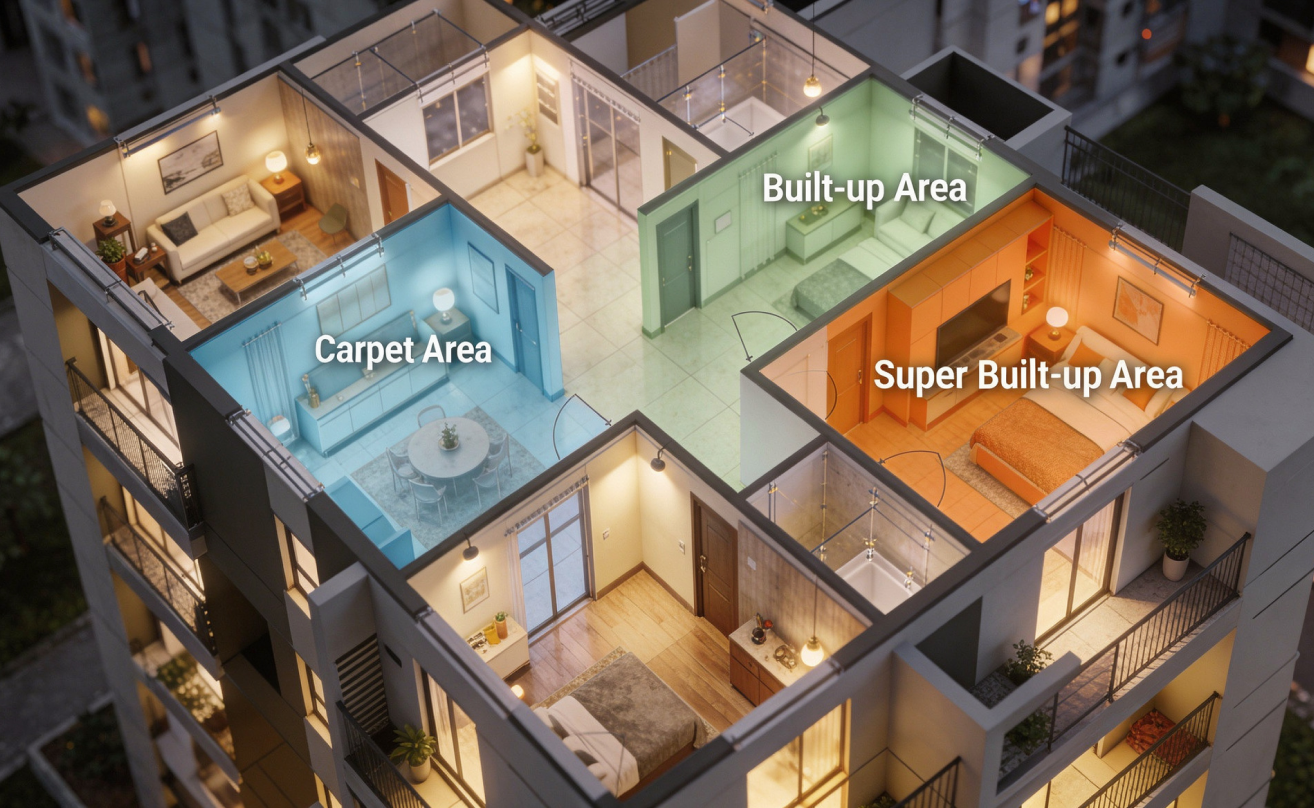
That question matters more than ever in today’s market. Across Delhi NCR, homebuyers are far more aware that terms like carpet area, RERA carpet area, built-up area, and super built-up area do not mean the same thing, and that the difference between them can change how a property’s value is understood. Industry explainers consistently distinguish carpet area as the usable space inside the apartment, built-up area as carpet area plus walls and certain attached spaces, and super built-up area as built-up area plus a proportionate share of common areas.
For Delhi NCR buyers, this is not just a technical detail. It affects price comparison, purchase clarity, and how confidently one can evaluate projects across developers. RERA-linked guidance has also made buyers more attentive to what developers are required to disclose, especially because RERA carpet area is presented as a standardized, buyer-friendly measure tied to actual usable floor area. In a market where multiple branded projects compete for attention, understanding these terms helps buyers move beyond brochure impressions and judge space with more confidence.
Why Area Terms Confuse So Many Homebuyers
- Flat Size Is Not Always What Buyers Assume
Many homebuyers believe the number shown in a brochure is the exact space they will use inside the apartment. In reality, that figure may refer to carpet area, built-up area, or super built-up area, and each one measures space differently. - Similar Terms Create Real Confusion
At first glance, these terms sound closely related, which is why many buyers treat them as the same thing. However, carpet area meaning, RERA carpet area, and built-up calculations each follow a different basis, making clarity essential before purchase. - Bigger Numbers Can Hide Smaller Usable Space
A flat may appear larger on paper because the quoted size is not always the actual liveable area inside the home. Without understanding the difference, buyers may compare projects using numbers that do not reflect practical space. - RERA Improved Transparency, but Awareness Still Varies
RERA helped standardize how developers present apartment sizes, especially through RERA carpet area. Yet many buyers across Delhi NCR still do not fully know what is included, what is excluded, and why it matters during booking. - Comparing Two Projects Can Be Misleading
One project may advertise a super built-up area, while another highlights the carpet area. If buyers compare both without checking the area basis, price comparisons can become inaccurate and confusing. - Budget Often Gets Priority Before Space Logic
Many first-time buyers focus first on price, payment plan, and location. Only later do they realize that understanding how space is measured is just as important as understanding the total cost. - Usable Space Drives Real Value
The true comfort of a home depends largely on how much functional area is available inside it. That is why buyers are increasingly looking beyond brochure size and asking sharper questions about practical livability. - Better Knowledge Leads to Better Buying Decisions
In the wider Delhi NCR real estate market, buyers who understand these terms are usually better positioned to judge value, compare homes fairly, and choose projects with greater confidence.
Understanding Key Real Estate Area Terms More Clearly
|
Term |
Meaning |
What It Usually Includes |
Why It Matters to Buyers |
|
Carpet Area |
The actual usable floor area inside the apartment that a homebuyer can use for daily living. |
Bedrooms, living room, kitchen, bathrooms, and internal circulation space within the flat. |
It helps buyers understand how much practical and functional space is actually available inside the home. |
|
RERA Carpet Area |
The standardized version of carpet area defined under RERA to improve clarity in real estate transactions. |
Net usable internal area of the apartment, including internal partition walls as per RERA rules. |
It gives buyers a more reliable basis for comparison and reduces confusion around quoted apartment sizes. |
|
Built-Up Area |
The broader apartment area is calculated by adding wall thickness and certain attached spaces to the carpet area. |
Carpet area, internal and external walls, balconies, and utility areas, depending on project design. |
It gives a wider idea of the apartment footprint, but it does not reflect only the usable living space. |
|
Super Built-Up Area |
The saleable area is calculated by adding a share of common spaces to the built-up area of the flat. |
Built-up area plus proportionate share of lobby, staircase, lift areas, corridors, and shared amenities. |
Buyers should understand this carefully because pricing is often linked to it, not only to usable space. |
How to Calculate Carpet Area and Built-Up Area
- Carpet Area Calculation
Start by measuring the usable floor space inside the apartment. This includes the living room, bedrooms, kitchen, bathrooms, and internal passage areas that fall within the home. It does not include balcony space, external walls, terrace, or common areas. In simple terms, carpet area is the portion of the flat that can actually be used for everyday living. - Built-Up Area Calculation
Take the carpet area and add the space occupied by the internal and external walls. In many cases, attached balconies, utility spaces, or flower beds may also be included, depending on how the project presents the measurement. This means built-up area is always higher than carpet area because it reflects the apartment’s broader structural footprint, not only the usable internal space.
Why Buyers Should Focus on Usable Space
For most homebuyers, the real value of a flat is not defined only by the number printed in the brochure, but by how much of that area can actually be used in daily life. This is why understanding carpet area meaning becomes so important. A home may appear large on paper, yet the practical living space can feel very different once furniture, movement, and room utility are considered. Buyers who focus on usable space are usually better able to judge comfort, functionality, and long-term livability.
This becomes even more important when comparing RERA carpet area, built-up area, and super built-up area across projects. Two apartments may seem similar in total size, but the one with better usable internal space may offer a stronger everyday experience. For buyers in the wider Delhi NCR real estate market, this distinction affects not only planning and comfort, but also value for money. Looking only at total quoted size can lead to misleading comparisons if the area basis is not clearly understood.
Usable space also plays a major role in how a home feels over time. It influences layout efficiency, furniture placement, circulation, and the practical quality of living inside the apartment. That is why buyers should not rely only on brochure numbers or pricing language. A clearer understanding of carpet area, RERA carpet area, and actual liveable space helps them compare homes more confidently and make smarter purchase decisions.
How Developers Present Area Transparently
Transparent area presentation usually starts with clearly separating carpet area, RERA carpet area, built-up area, and super built-up area instead of using one large number without context. Serious developers understand that buyers now want more than brochure-friendly figures; they want clarity on what is actually usable inside the home and what forms part of the wider saleable area. In markets like Delhi NCR, this has become especially important because homebuyers are comparing projects more carefully and asking sharper questions about value, layout efficiency, and actual living space.
This approach is often seen more clearly among established and premium developers, where better presentation standards help build buyer trust. Across the wider market, names such as Prateek Group, DLF, Godrej Properties, Lodha, Prestige Group, and ATS are often part of conversations where project details, planning quality, and area disclosures receive closer attention. For buyers, the key is not just which developer is being considered, but whether the project presents area figures in a way that is easy to understand, compare, and verify before booking.
Why RERA Changed Buyer Awareness in India
- Standardized Area Definitions Improved Clarity
One of RERA’s biggest contributions was bringing clearer definitions to terms such as RERA carpet area. Buyers became more aware that quoted apartment size and actual usable space are not always the same, which helped reduce confusion during property comparisons. - Greater Transparency Increased Buyer Confidence
RERA encouraged more structured disclosures around project details, approvals, timelines, and area statements. This gave buyers across India a stronger sense of confidence and made it easier to evaluate homes with better information before booking. - Buyers Started Asking Smarter Questions
Earlier, many buyers focused mainly on location and price. After RERA, more people began asking about carpet area, loading, possession commitments, legal approvals, and what exactly was being offered. This shift raised overall buyer awareness in the market. - Comparison Between Projects Became Fairer
With clearer disclosure norms, buyers found it easier to compare projects across different developers on a more informed basis. In competitive markets like Delhi NCR real estate, this encouraged greater attention to value, usable space, and long-term purchase clarity.
Projects Buyers Often Compare in NCR / Noida Markets
|
Developer |
Notable Projects Often Compared by Buyers |
Market Context Buyers Usually Consider |
|
Prateek Group |
Prateek Canary, Grand Begonia, Grand Carnesia, Grand Paeonia |
Strong relevance for NCR buyers looking at planning quality, family living, layout comfort, and better everyday usability |
|
ATS Group |
ATS Pristine, ATS Le Grandiose, ATS Destinaire, ATS Homekraft Pious Hideaways |
Often considered for construction reputation, project scale, and end-user-focused layouts |
|
Lodha |
Lodha Amara, Lodha Crown, Lodha Bellevue, Lodha Serenity |
Usually explored for branded housing, lifestyle positioning, and large-format development presence |
|
Prestige Group |
Prestige City Indirapuram, Prestige Beverly Hills, Prestige High Fields, Prestige Bougainvillea Gardens |
Often checked for premium perception, amenities, and wider market visibility |
|
DLF |
DLF The Crest, DLF Ultima, DLF New Town Heights, DLF Privana |
Commonly compared for luxury positioning, established presence, and large residential communities |
|
Eldeco Group |
Eldeco Live By The Greens, Eldeco La Vida Bella, Eldeco Edge, Eldeco Aamantran |
Usually seen as relevant for practical planning, mid-to-premium appeal, and family-oriented housing options |
Questions to Ask Before Booking Any Flat
- What Is the Exact RERA Carpet Area of the Apartment?
Before booking, buyers should confirm the RERA carpet area clearly, not just the larger size mentioned in marketing material. This helps them understand the actual usable space inside the home and compare projects on a more accurate basis. - Which Area Figure Is Being Used in the Price Quote?
It is important to ask whether the quoted price is based on carpet area, built-up area, or super built-up area. Without this clarity, two flats can appear similar in size while offering very different levels of practical space. - What Is Included and Excluded in the Total Area?
Buyers should ask what exactly has been added to the area figure. Balconies, utility spaces, wall thickness, and common area loading can all affect the final number, so knowing the basis of calculation is essential. - How Much of the Flat Is Actually Usable for Daily Living?
The real question is not just how large the flat sounds, but how well the internal space works in practice. Room layout, movement area, furniture placement, and circulation all matter when evaluating real comfort. - Is the Area Mentioned in the Brochure the Same as the Approved Documents?
Marketing brochures may simplify or highlight figures differently, so buyers should verify that the area details match the official paperwork and project documents before making a commitment. - What Is the Loading Factor in the Project?
If the project is being sold on a super built-up area, buyers should ask how much common area loading has been added. This helps them judge whether the quoted size is reasonable in relation to actual usable space. - Does the Layout Make Good Use of the Available Space?
Even when two flats have the same carpet area, layout efficiency can make a major difference. A buyer should assess whether the plan feels practical, open, and suitable for long-term living. - Am I Comparing This Flat Fairly With Other Projects?
Before booking any home, buyers should ensure they are comparing flats using the same area basis. In the wider Delhi NCR real estate market, this is one of the most important steps toward making a smarter and more confident purchase decision.
Buy by Clarity, Not Just by Brochure Size
In real estate, the size printed in a brochure does not always tell the full story. What matters more is how that space is defined, how much of it is actually usable, and whether buyers are comparing projects on the right basis. Understanding carpet area meaning, RERA carpet area, built-up area, and super built-up area helps remove confusion and gives buyers a clearer view of actual value before making a purchase decision.
For homebuyers across Delhi NCR, this clarity has become essential. A well-informed buyer is better positioned to judge comfort, layout efficiency, pricing fairness, and long-term suitability across different projects. In that process, developers that present area details more transparently naturally stand out more strongly. That is why buying a home should never be based only on a large quoted number, but on a clear understanding of the space behind it.






Leave a Reply