

Sector 150 first enters the conversation through one phrase: sports-city living.
It sounds active. Cleaner. Less crowded. A little more planned than the usual Noida apartment search where every project promises the same clubhouse, pool, and green view.
Then the buyer visits the site.
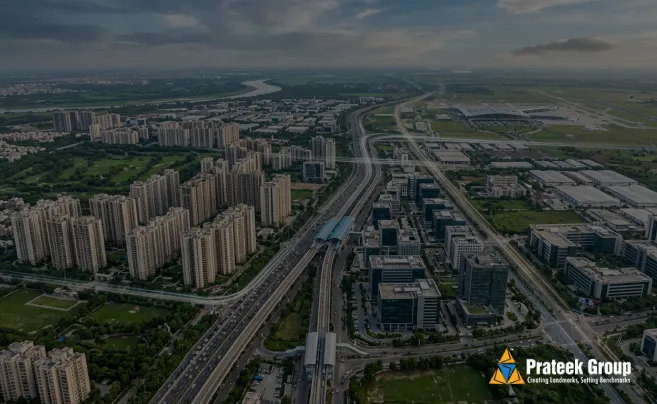
The roads feel wider. The air feels less squeezed than older Noida pockets. A broker points toward open land and says, “This is Sports City Sector 150 Noida.” The family looks at the tower, the balcony, the clubhouse, and starts picturing morning walks, children playing outside, grandparents sitting in the evening breeze, and weekends that don’t always mean driving to a mall.
That is the emotional hook of Sports City Sector 150 Noida.
But a home is not bought inside a brochure. It is lived in during school runs, office traffic, grocery trips, maintenance meetings, registry delays, and evening walks after a long day.
So the real question is simple: what do residents actually get in Sector 150?
The morning test of Sports City Sector 150 Noida
A buyer usually understands Sector 150 better at 6:30 in the morning than during a proper site visit at noon.
That is when the location stops performing. Joggers come out. Cycling groups move across the roads. Parents walk with children before school. A few residents head to the clubhouse gym because the tennis court booking is already full.
This is the daily promise behind Sports City Sector 150 Noida. People are not only looking for Flats In Sector 150 Noida. They are looking for a routine that feels healthier, quieter, and less boxed in than many busier parts of Noida.
But the sports-city tag needs careful reading.
A Hindustan Times Sports City report said the Supreme Court directed Noida Authority to issue conditional occupancy certificates for compliant housing projects in Sector 150 under the Sports City scheme and allowed registries where developers had met building rules.
That word, conditional, matters.
It tells buyers that Sports City Noida is connected to approvals, compliance, sports infrastructure, registries, dues, and delivery. It is not only about cricket nets, jogging tracks, and green views.
For someone looking at Property In Sector 150 Noida, the better question is: which part of the sports-city promise becomes part of everyday life?
A resident will judge the sector through smaller things. How crowded does the lift feel? Is the walking track used? How long does the commute take? Are sports facilities open? Can daily errands happen without taking the car every time?
That is where Living In Sector 150 Noida becomes real.
What does “sports-city living” actually mean here?
Sports-city living sounds simple until someone asks what residents get beyond the name.
In Sector 150, the idea comes from a larger planning promise. Sports and recreational infrastructure were meant to sit at the center of the area, while residential and commercial development worked around that identity.
A Daily Jagran Sports City update reported that Noida Authority imposed 23 conditions after the Supreme Court order, including the 70:30 sports-to-residential use ratio and occupancy certificate movement for select towers.
That makes the location different from a normal apartment cluster.
It also makes buyer checks more serious.
| What buyers hear | What residents should check |
| Sports City Sector 150 Noida | Which sports facilities are ready, open, and maintained |
| Green living | How much open space exists inside and around the project |
| Low-density sector | Tower spacing, lift load, parking pressure, and visitor movement |
| Golf-facing or green-facing homes | Whether the view depends on future land use |
| Better lifestyle | Daily commute, school access, grocery runs, and healthcare reach |
| Strong project ecosystem | Registry status, OC status, RERA details, and maintenance quality |
This is where Sector 150 Noida Projects need a grounded review.
A buyer should check both the project and the larger Noida Sports City status before deciding. A Moneycontrol registry report said Noida lifted a 5-year ban on occupancy certificates for Sector 150 Sports City homes after a Supreme Court order, with registries set to resume for compliant projects.
That matters because a sports-led location can still create stress if documents remain stuck.
For residents, the value of Apartments In Sector 150 Noida comes from the full mix: open surroundings, sports access, project planning, legal clarity, and daily comfort.
The green-space promise: what residents actually feel?
Sector 150 gets called the Greenest Sector In Noida because its planning story has always leaned toward open space.
Real estate market commentary on Sector 150 green planning says the sector’s land-use pattern kept about 80% of the 600-acre land parcel under greenery, with around 42 acres marked for parks and recreation.
That idea explains why families compare Sector 150 Noida with denser pockets near Sector 75, Sector 78, or parts of Central Noida.
The roads feel more open. The skyline feels less squeezed. Morning walks do not always feel like a fight for pavement space.
For families moving from crowded apartment clusters, that difference can feel bigger than a clubhouse feature.
But green living should be judged by use.
A buyer should ask:
- Is the green view permanent or dependent on nearby land use?
- Does society have usable lawns, walking paths, shaded sit-outs, and play zones?
- Are open areas maintained throughout the year?
- Does the project feel open at ground level, or only from the balcony?
- How crowded do common spaces feel during weekends?
This is where Low Density Sector In Noida becomes more than a phrase. Low-density living should mean fewer homes sharing lifts, parking, internal roads, club facilities, and open areas.
Prateek Group fits naturally here because Prateek Canary sits inside this location. The Prateek Canary official page lists the project in Sector 150 with 664 low-density homes across 12.55 acres.
For residents, the test is simple.
Can a child cycle safely inside the community? Can older parents walk without dodging cars every 2 minutes? Can someone sit outside in the evening without feeling trapped between towers?
When the answer is yes, the green promise starts becoming daily life.
Connectivity: where the quiet sector meets real travel?
Sector 150 feels calm because it sits away from the thickest traffic pockets of Noida.
That calm is part of its appeal. The trade-off is commute planning.
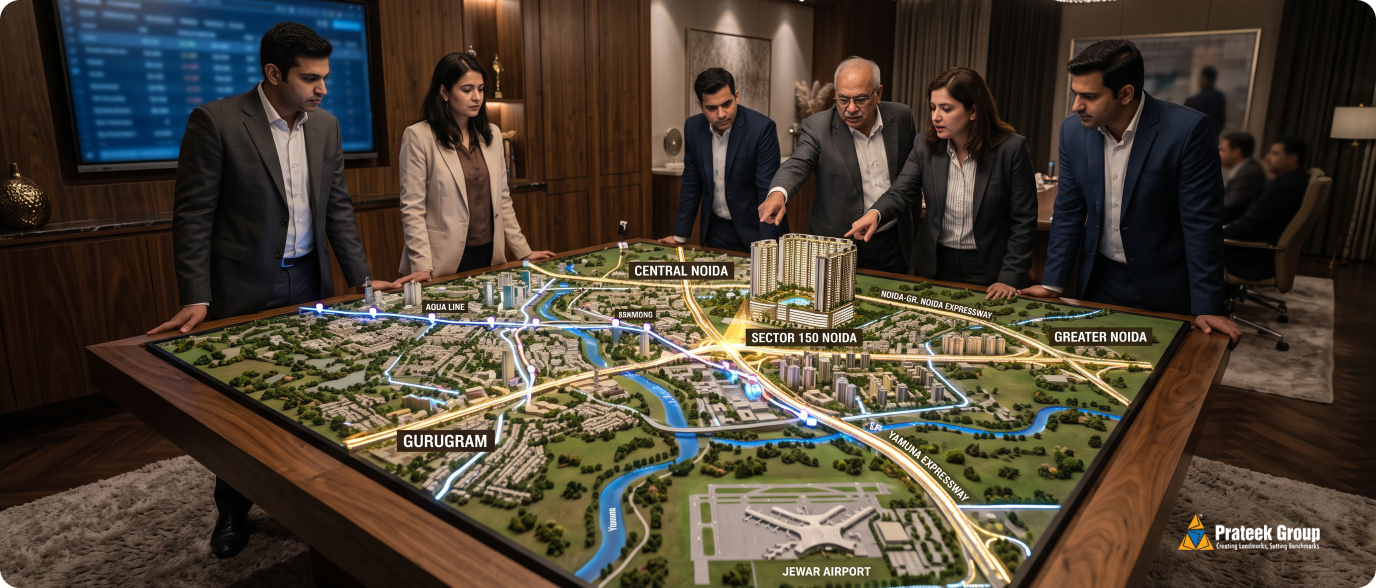
A family looking at Property In Sector 150 Noida should check where they travel most: Sector 62 offices, Delhi, Greater Noida, the expressway belt, schools, hospitals, or the future airport zone.
A peaceful address still needs a workable weekday route.
The sector gets its main strength from the Noida-Greater Noida Expressway belt. Metro access may improve too, since the PM India metro approval covers the 11.56 km Aqua Line extension from Sector 142 to Botanical Garden, with 8 elevated stations planned.
That helps the larger expressway belt. It does not turn every Sector 150 tower into a walk-to-metro home.
| Daily route question | What residents should check |
| Office commute | Actual drive time during 9 AM and 6 PM |
| Metro access | Nearest usable station, cab time, parking, and last-mile cost |
| Airport travel | Future airport routes, expressway access, and peak-hour uncertainty |
| School runs | Whether school buses enter the society or stop outside |
| Grocery and errands | Time needed for daily essentials |
| Medical access | Nearby clinics, hospitals, ambulance reach, and night-time travel |
A Noida metro extension report said the Botanical Garden station will become an interchange between Noida Metro’s Aqua Line and Delhi Metro’s Magenta and Blue lines.
That matters for Sector 150 Noida Connectivity, especially for residents who depend on Delhi Metro.
Still, a buyer should do 2 visits before deciding: one during morning office traffic and one after sunset. The first visit tells you the truth. The second tells you how the sector feels when daily life slows down.
Sports facilities: the promise residents should test on ground
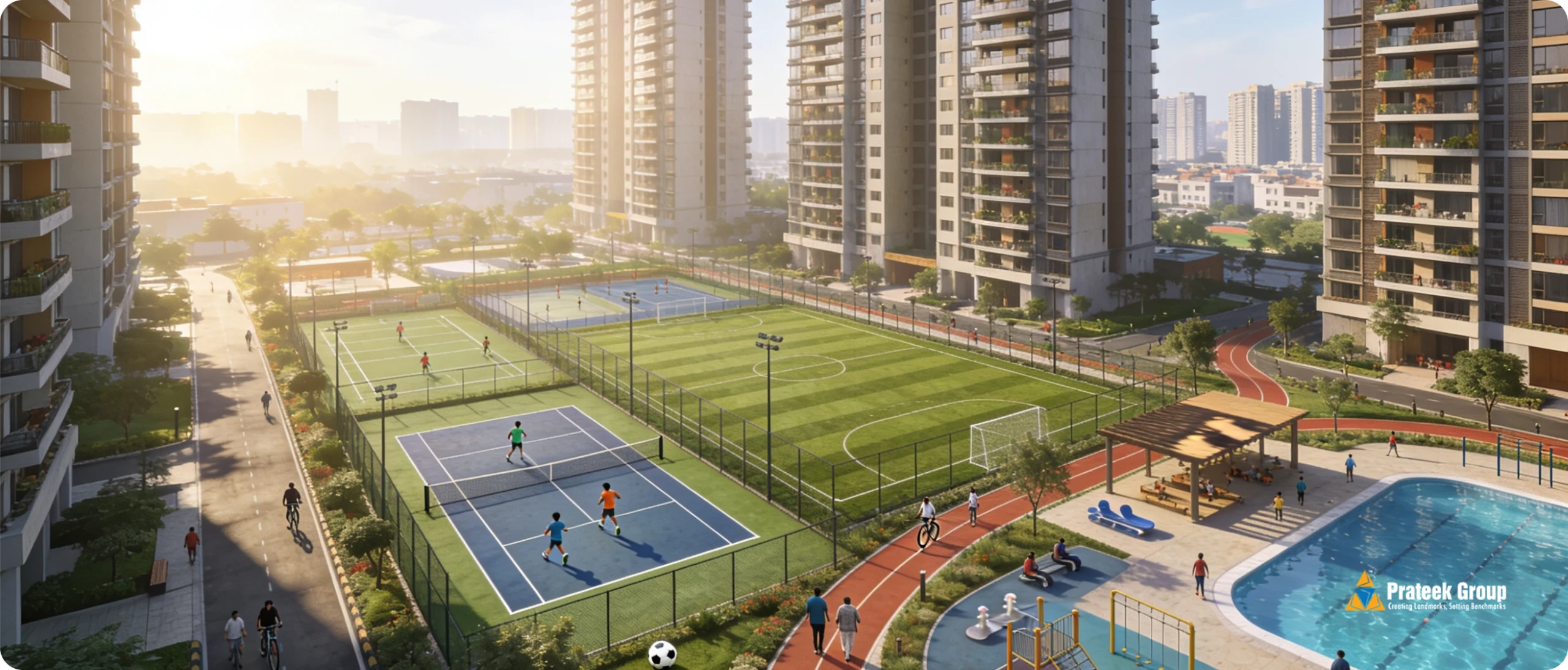
A sports-city address sounds exciting when you hear it for the first time.
You picture cricket nets, tennis courts, skating zones, swimming pools, football turf, jogging tracks, and maybe a proper stadium somewhere nearby.
Then you move in and the question becomes smaller: what can your family actually use this week?
That is where Sports Facilities In Noida need a practical check. The larger Sports City Noida plan has been tied to a sports-first land-use condition, and a sports-city compliance update said 70% of land had to be used for sports and recreational infrastructure in the broader Sector 150 Sports City plan.
Residents should separate the sports promise into 3 parts.
Society-level sports
These are the facilities inside the apartment project: gym, pool, indoor games, badminton court, tennis court, skating area, yoga lawn, walking track, or children’s play zone.
These matter most because residents use them without planning a full outing.
Sector-level sports
These are facilities promised or planned as part of the larger Sports City Noida idea. Buyers should ask whether these are ready, under construction, revised, delayed, or tied to approvals.
A sports-city label has less meaning when the nearby sports infrastructure is still a future line on paper.
Everyday movement
This is the part brochures usually underplay.
Wider internal roads, safer walking areas, shaded paths, and cleaner open spaces decide whether people actually build a healthier routine.
A Sports City regulatory report said the Supreme Court asked developers linked to Noida Sports City to submit revised proposals, while giving interim relief and setting a payment plan for outstanding dues.
That kind of update matters to residents. It reminds buyers to ask: What is ready? What is approved? What is delayed? What will be maintained after possession?
A good sports-city life starts when the facilities stop being a drawing and become part of the weekly routine.
Daily life: groceries, schools, doctors, and weekend plans
A sector can feel peaceful and still make daily life tiring.
That is the hidden test for Living In Sector 150 Noida. The morning walk may feel good. The balcony may open toward greenery. The roads may feel calmer. But residents still need milk, medicines, school buses, repair workers, salons, cafés, tuition classes, and a doctor who can be reached without turning every errand into a mini road trip.
Sector 150 works best as a quieter residential pocket connected to larger services around the expressway belt.
The Prateek Canary location page also frames the project around Sector 150’s connectivity and family living, which shows how developers use the location’s residential rhythm as part of the buyer story.
That is a useful context. It still needs ground checking.
| Daily need | What residents should check before buying |
| Groceries | Are there shops inside or near the society gate? |
| Schools | Does the school bus enter the project or stop outside? |
| Healthcare | Which hospital is practical at night? |
| Food delivery | Are restaurants nearby enough for regular delivery? |
| Domestic help | Is staff availability steady in the society? |
| Repairs | Are electricians and plumbers easy to find? |
| Weekend plans | Do families drive toward malls, clubs, or expressway-side cafés? |
This is where Noida Greater Noida Expressway Property has a different rhythm from older Noida sectors.
You may get quieter surroundings and open space, but some errands may still depend on the car.
A buyer should match the sector to their actual household. A retired couple may care more about medical reach and walking space. A family with school-going children may care about bus routes, activity classes, and commute timing. A working couple may ask whether food delivery, cabs, and expressway travel feel smooth after 8 PM.
This is the honest way to judge Property In Sector 150 Noida.
Registry and OC status: the boring detail residents care about most
A buyer may come to Sector 150 for open space. A resident cares about paperwork after possession.
That is where the Sports City Noida story becomes very real. If the occupancy certificate, registry, revised layout, dues, or sports infrastructure conditions are stuck, families can live in homes that still feel legally unfinished.
A Hindustan Times OC update said Noida Authority lifted a 5-year ban on occupancy certificates, registries, and sale-purchase activity for completed apartments under the Sports City scheme in Sector 150 after a Supreme Court order.
That was a major relief for affected homebuyers.
Some families had possession but no registry. Some had paid most of the money but could not complete ownership paperwork. Some were waiting for clarity while managing EMIs, rent, or both.
For residents, conditional approval means relief with homework still attached.
Before buying Flats In Sector 150 Noida, a buyer should ask:
- Has the project received OC or conditional OC?
- Is the registry open for the specific tower?
- Are dues cleared or covered under an approved plan?
- Has the revised layout been approved?
- Are sports infrastructure conditions linked to future compliance?
- Is the unit part of an affected Sports City land parcel?
- What does the latest buyer association update say?
A Daily Jagran Noida report also covered Supreme Court-linked partial relief for buyers in Sector 150, including conditional occupancy certificates for six residential towers.
A sports-city address can feel attractive. A registered home feels safer.
That is why paperwork deserves the same attention as the balcony view.
The 70:30 rule: why buyers should care about land use?
Sports City Sector 150 Noida was built around a planning promise: most of the land should support sports and recreational use, while residential and commercial development should remain limited.
That promise matters because it protects the sector’s basic character.
A Sports City conditions report said Noida Authority’s conditions included the 70:30 sports-to-residential use ratio after the Supreme Court order.
For residents, this ratio is not a technical planning line. It decides whether the area grows as a sports-led pocket or turns into another dense real estate cluster.
| What the 70:30 rule affects | Why it matters to residents |
| Sports grounds | More usable recreation space if the plan is followed |
| Housing density | Lower risk of the sector feeling overbuilt |
| Commercial activity | Better control over traffic, crowding, and noise |
| Open areas | More breathing room around residential pockets |
| Future livability | Stronger chance that the sports-city identity survives |
| Buyer confidence | Clearer planning reduces confusion during resale |
The risk appears when land use starts shifting away from the original promise.
A Times of India layout story reported that Noida Authority rejected a revised layout proposal for a Sector 150 Sports City plot after the proposed commercial use crossed the allowed limit and did not match the sports-focused design.
That is the kind of update buyers should read.
If too much land becomes commercial, residents may get more crowding, more traffic, and less of the quiet sports-led setting they expected. If sports land stays protected and gets built properly, the sector keeps the identity buyers paid for.
This is why Sector 150 Noida Projects need more than amenity comparison. A buyer should check the larger land parcel, approved layout, RERA details, registry status, and Sports City compliance.
Airport and metro growth: useful, but residents should measure daily impact
Sector 150 has started getting linked with bigger NCR infrastructure stories.
Airport access, metro expansion, expressway movement, and the Yamuna belt all shape how buyers read this location.
The PIB airport release says Phase 1 of Noida International Airport has been developed with an investment of around ₹11,200 crore under a PPP model, with initial capacity of 12 million passengers per year and future capacity up to 70 million passengers per year.
For residents, this matters in a practical way.
Airport-led growth can bring better roads, more services, stronger rental interest, and more attention from businesses. But daily life still depends on how fast you reach office, school, hospital, metro, and groceries from your actual tower gate.
The metro side matters too.
An ETRealty metro report said the Aqua Line extension from Botanical Garden to Sector 142 will cover 11.56 km, add 8 stations, and aim for completion in 4 years.
That does not make Sector 150 a direct metro sector for most residents. It does make the larger Noida Expressway belt easier to connect with Delhi Metro once the corridor is built.
| Infrastructure update | What it may mean for residents |
| Noida International Airport | Better regional visibility and future travel access |
| Aqua Line extension | Easier connection toward Botanical Garden and Delhi Metro |
| Expressway access | Faster movement toward Noida, Greater Noida, and Yamuna belt |
| Airport-linked roads | Possible traffic relief, depending on final execution |
| More business activity | Stronger rental demand in select pockets |
| Wider buyer interest | Better resale attention for well-documented projects |
A buyer looking at Noida Greater Noida Expressway Property should not treat every future project as an immediate benefit.
Some changes help quickly. Some take years. Some change traffic patterns before they improve travel.
Big infrastructure brings attention. Daily timing decides comfort.
Who actually fits this kind of Sector 150 life?
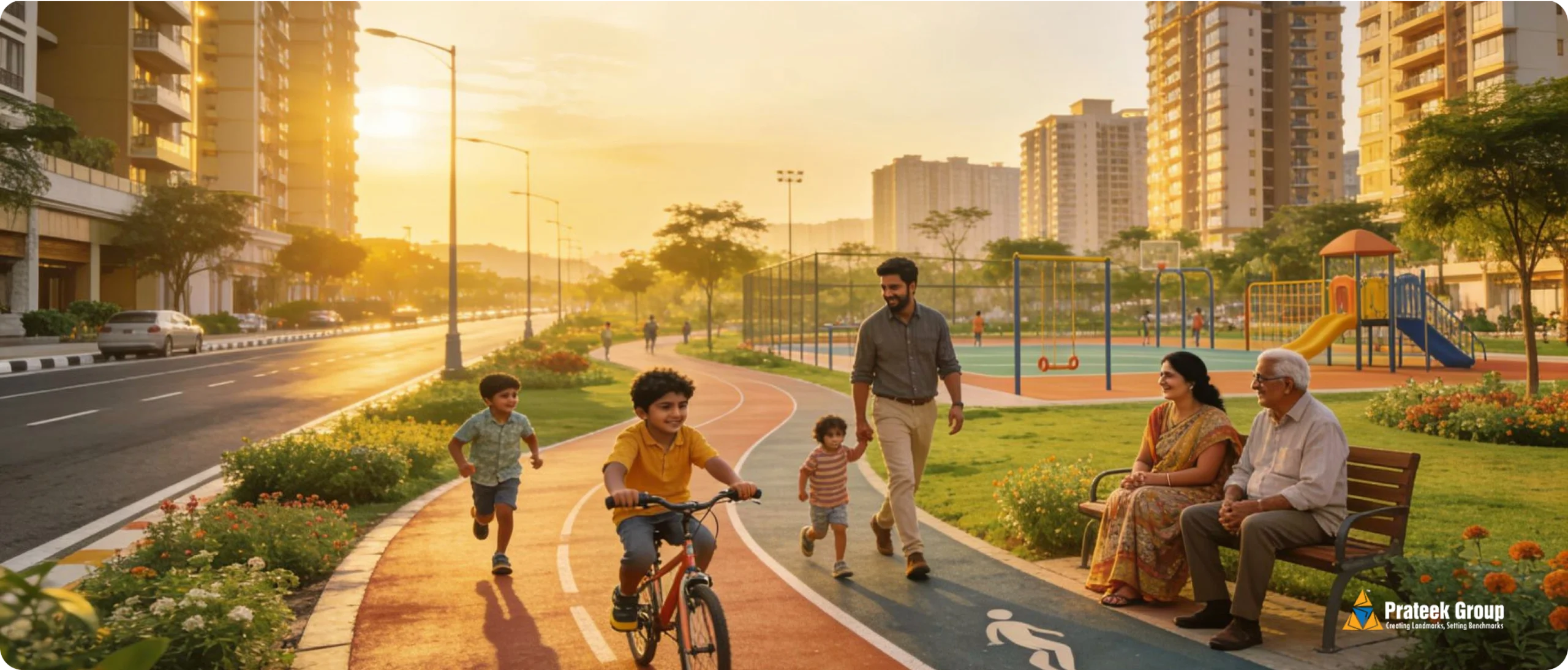
Sports-city living suits a certain kind of buyer very well.
It works for people who want open surroundings, quieter roads, larger community spaces, sports amenities, and a slower residential rhythm after work.
The airport and expressway story also keeps the location in buyer conversations. An Economic Times airport report said the first phase of Noida International Airport has pushed attention toward land and real estate around the wider Noida and Jewar region.
That wider attention can help the region. The home still has to fit your life.
A family moving from a cramped sector may feel the difference quickly. The child gets more outdoor time. The grandparents get walking space. The working couple gets a calmer return home after expressway traffic. Weekend mornings can shift from mall visits to cycling, swimming, tennis, or a long walk inside the society.
This location may suit you if
- You want a quieter residential pocket.
- You care about open space and sports amenities.
- You can manage some errands by car.
- You work near the expressway belt, Greater Noida, or hybrid office routes.
- You prefer low-density living over busy high-street convenience.
- You are buying for long-term use.
You should think harder if
- You need markets, cafés, clinics, and schools within a short walk.
- You depend fully on public transport right now.
- Your office commute cuts through heavy Noida traffic every day.
- You want an older, fully settled neighborhood feel.
- You dislike waiting for social infrastructure to grow around you.
For the Prateek Group, the connection should stay natural. Prateek Canary belongs in this discussion because its UP RERA project page lists the project as PRATEEK CANARY with registration number UPRERAPRJ591510.
That gives buyers one more document trail to check, along with site visits, registry updates, and resident feedback.
Sector 150 works best for people who value space, calm, sports-led amenities, and future connectivity. It can feel stretched for people who want old-neighborhood convenience at the gate.
Conclusion: what residents actually get in Sector 150
Sports City Sector 150 Noida gives residents a clearer promise than many other Noida pockets: more open space, sports-led planning, wider movement, and a quieter residential rhythm.
But the resident experience depends on 3 checks: what the society has delivered, what the larger Sports City plan has cleared, and how the daily commute works after the first month of living there.
A Moneycontrol registry report is a useful reminder that the Sports City tag carried a long OC and registry pause for many buyers before recent relief came through.
The wider infrastructure story is also real. The Noida airport official update says the airport’s masterplan can serve over 70 million passengers annually in later phases, while the approved metro extension adds more future mobility strength to the expressway belt.
Those upgrades give the location stronger future context.
Daily life still comes down to smaller things: lift load, walking space, sports access, school routes, registry status, grocery convenience, and how the sector feels after sunset.
For Prateek Group, the better approach is simple. Let Sector 150’s planning story do the first part of the work. Then let the project’s low-density planning, RERA status, amenities, legal clarity, and resident comfort speak where buyers need proof.
Sports-city living works best when the lifestyle is visible, usable, and documented.
FAQs on Sports-City Living In Sector 150
1. What is Sports City Sector 150 Noida?
Sports City Sector 150 Noida is a planned residential and sports-led development zone in Noida, where housing is linked with larger sports and recreational infrastructure. A Hindustan Times Sports City report said the Supreme Court allowed conditional OCs and registries for compliant housing projects in Sector 150 under the Sports City scheme.
2. Is Sector 150 Noida good for families?
Yes, Sector 150 can suit families that want more open space, sports amenities, quieter surroundings, and a less crowded residential feel. Families should still check school routes, medical access, grocery options, cab availability, and actual commute timing before buying.
3. What do residents actually get in Sector 150?
Residents usually get a quieter setting, project-level club amenities, walking spaces, better road width in several pockets, and access to the Noida-Greater Noida Expressway belt. The larger Sports City promise depends on sports infrastructure delivery, land-use compliance, and authority approvals.
4. Is the Sports City project in Noida fully complete?
The larger Sports City story is still tied to compliance and phased approvals. A Daily Jagran Sports City update reported that Noida Authority imposed 23 conditions after the Supreme Court order, including the 70:30 sports-to-residential use ratio.
5. What is the 70:30 rule in Noida Sports City?
The 70:30 rule means 70% of the land should support sports and recreational use, while 30% can be used for residential and commercial development. This ratio matters because it protects the sports-led identity of the area.
6. Are registries open in Sector 150 Sports City?
Registries have started moving for compliant projects after Supreme Court-linked relief. A Moneycontrol registry update said Noida Authority lifted the OC ban for Sector 150 Sports City homes after a 5-year wait, clearing the way for registries to resume for compliant projects.
7. Should buyers check OC before buying in Sector 150?
Yes. Buyers should check the occupancy certificate, conditional OC status, tower-level registry status, RERA details, dues, and whether the project falls under any affected Sports City parcel.
8. Is Sector 150 connected to the metro?
Sector 150 does not work like a direct walk-to-metro location for most residents. The approved Aqua Line extension from Sector 142 to Botanical Garden improves the wider expressway belt’s metro access, and the ETRealty metro report says the route will cover 11.56 km and add 8 stations.
9. How does Noida International Airport affect Sector 150?
The airport adds long-term regional value because it improves NCR’s aviation and business map. The PIB airport note says Phase 1 has been developed with an investment of around ₹11,200 crore and has 12 MPPA initial passenger capacity.
10. Is Sector 150 better than other Noida sectors?
Sector 150 is better for buyers who prefer open space, sports amenities, calmer surroundings, and expressway access. Older Noida sectors may feel more convenient for markets, schools, clinics, and walkable daily errands.
11. Are Flats In Sector 150 Noida good for end use?
Flats In Sector 150 Noida can work well for end users who value lifestyle, open surroundings, and sports-led amenities. Buyers should still visit during peak traffic, check maintenance quality, and speak to existing residents before deciding.
12. Is Property In Sector 150 Noida good for investment?
Property In Sector 150 Noida has long-term interest because of expressway access, airport-led growth, metro expansion, and low-density planning. Investment depends on legal clarity, pricing, possession status, registry status, and resale demand.
13. What should buyers verify before buying in Sports City Noida?
Buyers should verify RERA status, OC, registry eligibility, revised layout approval, builder dues, tower completion, maintenance setup, sports facilities, and resale restrictions. A lawyer should review title papers before token money is paid.
14. Are sports facilities ready in Sector 150?
Sports facilities vary by project and land parcel. Buyers should check which facilities are ready inside the society, which are planned at the sector level, and which are still linked to authority approvals or future development.
15. Does Sector 150 have good green space?
Sector 150 has a stronger green-space identity than many dense Noida pockets. Buyers should still check whether open space is usable, maintained, shaded, and accessible inside the project instead of trusting only aerial views or brochure claims.
16. Is Prateek Group relevant to Sports City Sector 150?
Prateek Group is relevant because Prateek Canary sits in Sector 150 and connects naturally with the low-density, sports-led location story. Buyers should review project planning, documentation, RERA status, delivery timeline, and resident comfort before deciding.
17. Who should buy in Sector 150 Noida?
Sector 150 suits families, hybrid workers, senior residents, and buyers who want open surroundings with expressway connectivity. People who want dense market access, direct metro walking distance, and older neighborhood convenience should test the location carefully before buying.




Leave a Reply